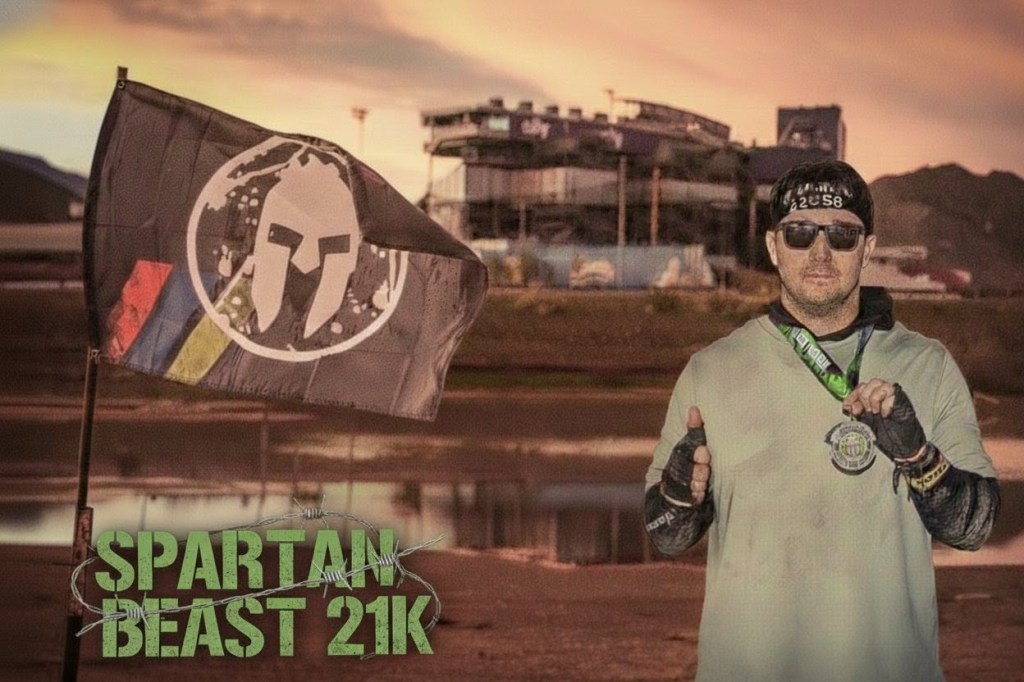
The Spartan competitions are difficult. They are not simply a course that you run or walk. They test your endurance and physical prowess with course length and obstacle challenges. This combination is challenging for even the healthiest athletes and fitness enthusiasts. If you add some physical ailment, this difficulty is amplified. And, here, in this entry, we will explore the steps I took to ensure completion of the Spartan Beast 21k race with several physical ailments in my mid-forties.
“A river cuts through rock, not because of its power, but because of its persistence.” – Jim Watkins.

Let’s start with open honesty. I’m a man in his mid-forties. I have bad knees, a bad hip, and a bad shoulder. A car accident permantly damaged my knees. Jumping off a roof in my underwear and bouncing off a swimming pool deck into a swimming pool permantly injured my hip. Slipping in a hallway and landing on my shoulder permantly injured my shoulder. This body of mine has seen some mileage.
In February, I was talked into completing the Spartan Super 10k. That was difficult. My shoulder “popped” more than halfway through the course. As a result, all the hand-over-hand challenges I took a penalty lap to complete. Regardless, the folks from the gym and I all completed the race together.
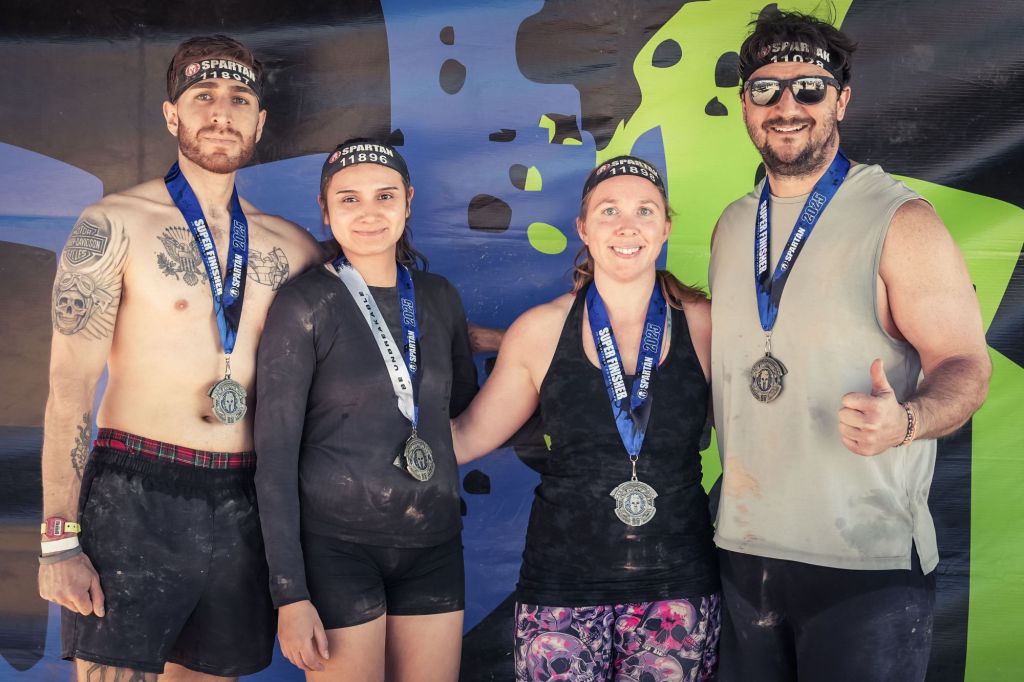
After that race, I knew I needed to prep better for the next race. My body felt like I was hit by a garbage truck that night and worse the following day. I had difficulty walking. My legs hurt. My hip hurt. My shoulder hurt. Everything hurt, but I completed the 10k challenge.
For this next race, I began prep much earlier. I took the rest of February, Spring, and part of Summer to rest and weight train as normal. Then, I began to prep for the Beast 21k.
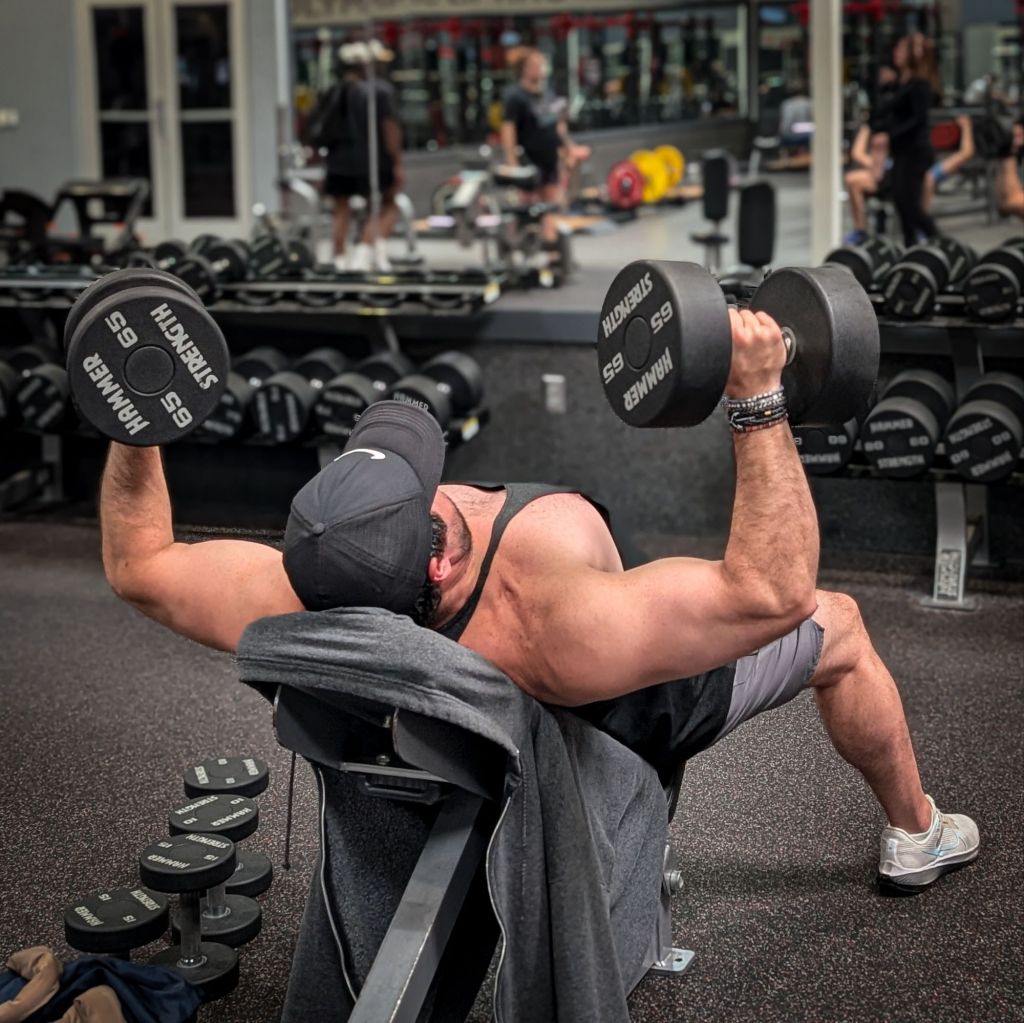
I didn’t use a personal trainer. I didn’t use physical therapists. I simply took all the knowledge I had from years of weight training and physical therapy and applied it. I used AI to help me craft a workout program. This needed to be geared towards preparing my body for the race and the specific challenges that await.
I knew that weight training alone wouldn’t be enough for this particular race. It’s 21km, which breaks down to about thirteen miles. Running and endurance would be paramount. It was absolutely necessary to prep my body for the distance, as well as, the obstacles.
The AI that I utilized was Google’s Gemini. I told it specifically the race I was completing. Then, with some extra information regarding the physical ailments I knew I needed to work through, I had it construct a fitness program.
This program began after pre-training prep. Pre training prep lasted about six weeks. It consisted of short sprints, weight training, and functional fitness training (i.e. HIIT). It was a solid wake up call to my body.
The actual program I completed lasted nine weeks. Each segment was broken into two week periods of training. Then, by the end of the nineth week, it was time to race.
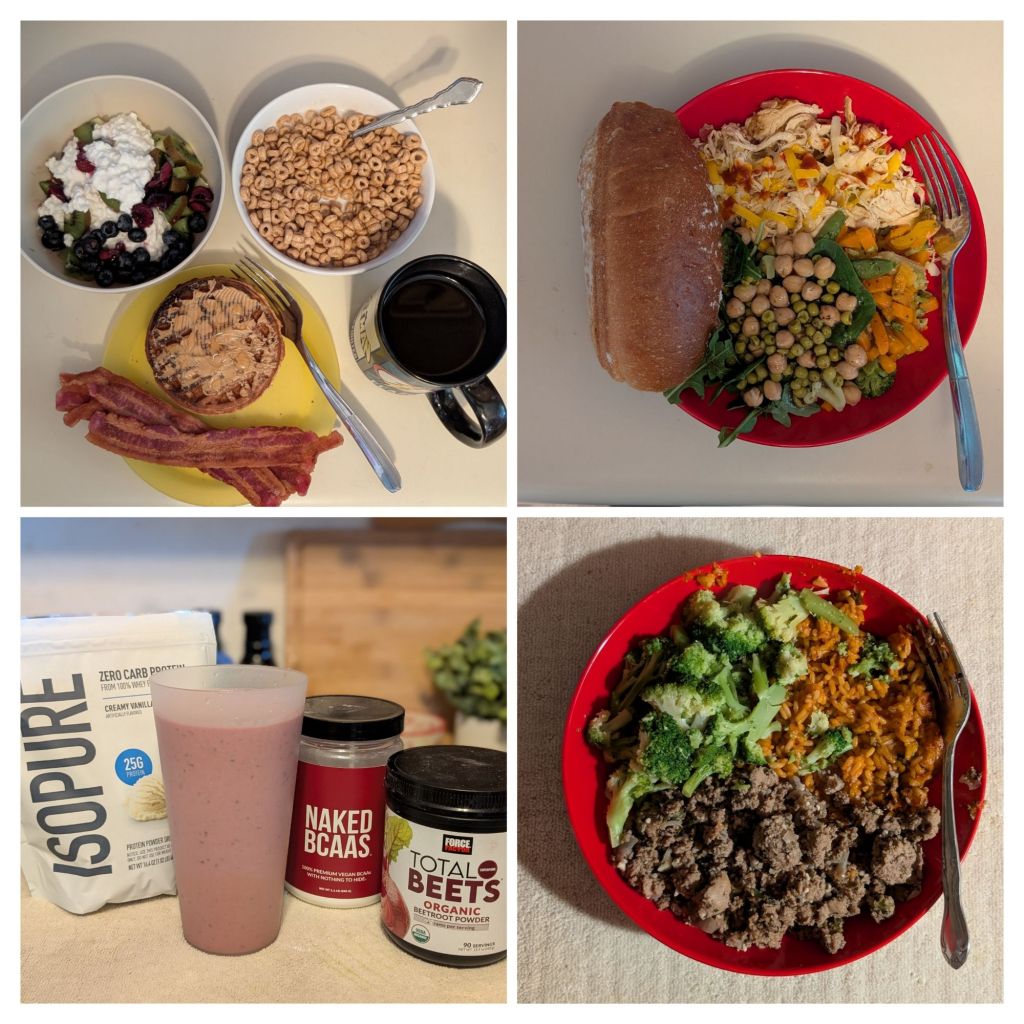
In general, the workout programs I utilized were incredibly efficient. Gemini also helped me with pre and post race body care. I purchased some zero sugar sports drinks it recommended. I also bought the cherry juice it recommended. I used an app called MyFitnessPal to track my calories and macros (i.e. protein, fat, carbs). I had my vitamins and protein smoothies with amino acids. The preparation for this race was serious business.
The race went well. However, it was not without its challenges. For exmaple, by week six in the training, I injured my foot running. I completed a thirteen mile cardio push. This consisted of running for a mile, then walking for a mile, and repeat. My foot was swollen. It was about twice the size as my other foot. This lasted for about a full week.
I also injured that same foot hiking an elevin mile trail through the desert. However, that injury only lasted a few days. My foot was swollen. It lasted only the weekend. Regardless, I knew something was bothering my foot and would be a potential issue on race day.
The other issue that arrived was sleep related. For some reason, I couldn’t sleep two days before the race. I woke up around 10am with two days to go before the race. I stayed awake until about 6pm the day before the race. Not great when you’re preparing for a thirteen mile obstacle course. But, I did fall asleep early the day before and slept for almost twelve hours. So, that helped.
The morning of the race, I woke up early with my alarm. I brewed some coffee. I ate a slice of sourdough bread with peanut butter, bananas, and honey. Then, I got dressed for the race. I wrapped my feet with tape. This was crucial for two reasons.
First, I knew my foot might swell up during the race. It did. It started to swell around the tenth mile. The compression needed to be there to stabilize it and reduce the swelling. Second, the tape helps prevent blisters. The course ended up being approximately fifteen miles. Not a single blister was on my feet.
In closing, the Spartan Beast 21k is challenging. Being in your forties, with some physical challenges, only adds to the difficulty. However, with proper training, diet, and pre/post race care, it is absolutely doable, with manageable pain.
If you’re considering attempting a Spartan, here’s the workout program I utilized. It’s nine weeks long. It was drafted with my knowledge and Google Gemini. Remember, neither I or Google are responsible for you, your actions, or any possible injuries. We aren’t personal trainers or professional weight lifters. Exercise with caution and listen to your body.
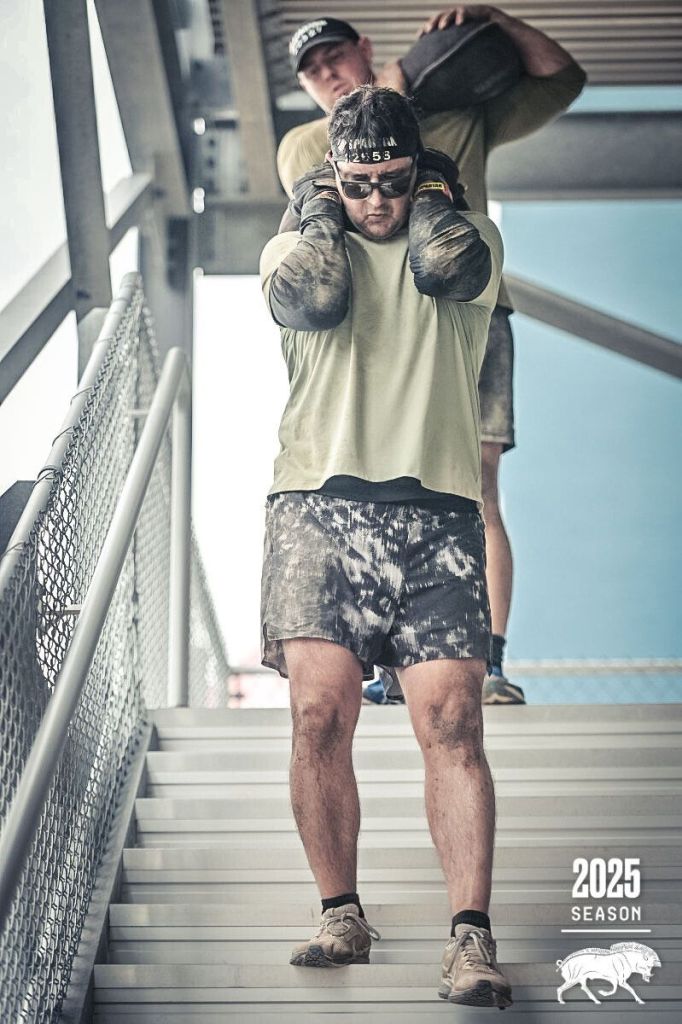
Also, don’t forget, you’ll want to ramp up your cardio. Running isn’t enough for a Spartan. You need cardio with sandbags and medicine balls. And, if you’re a man, make sure they weigh sixty pounds or more. The items weigh about sixty pounds on the actual course for us men, and less for the ladies.
If you live near Phoenix Arizona, I have two important recommendations for you. First, you need to add Camelback Mountain to your cardio routine. The incline and length, plus some hand-over-hand required on the mountain, is perfect prep. Second, make sure you complete Hiking Trail 100. It’s an endurance hike that’s about elevin miles long.
Finally, for all your runs, make sure you wear your backpack or a weighted vest. I always ran with my backpack, which weighed an extra five to ten pounds. The extra weight will better condition your body for the challenge of completing thirteen or more miles with obstacles.

Spartan Training Program:
Week 1-2
Day 1:
Inverted Rows: 3 sets of 12 reps
Dumbbell Rows: 3 sets of 12 reps
Dead Hangs: 3 sets of 30 seconds
Dumbbell Bicep Curl: 3 sets of 15 reps
Incline Dumbbell Bench Press: 3 sets of 15 reps
Day 2:
Push Ups: 3 sets as many as possible
Dumbbell Overhead Press: 3 sets of 12 reps
Bench/Box Dips: 3 sets of 15
Plank: 3 sets of 45 second holds
Battle Ropes: 3 sets of 30 seconds
Day 3:
Goblet Squat: 3 sets of 15 reps
Walking Lunges: 3 sets of 10 reps
Farmers Carry: 3 set of 50 meters (?ft) with moderate weight
Calf Raises: 3 sets of 20 reps
Jump Rope: 3 sets of 60 second sessions
Bear Crawl: 3 sets of 10 reps
Day 4:
30-45 minutes of light cardio
Foam roll muscles
Day 5:
Endurance Run: 45 minute run at a conversational pace
Week 3-4:
Day 1:
Pull-ups (5 sets until failure)
Bent-Over Barbell Rows (4 sets x 10 reps)
Plate Pinches (3 sets x 30-second hold per hand)
Hammer Curls (3 sets x 12 reps)
Incline Dumbbell Bench Press: 3 sets of 15 reps
Day 2:
Dumbbell Bench Press (4 sets x 10 reps)
Pike Push-ups (3 sets until failure)
Dumbbell Lateral Raises (3 sets x 15 reps)
Overhead Tricep Extensions (3 sets x 12 reps)
Battle Ropes: 3 sets of 45 seconds
Day 3:
Barbell Back Squats (4 sets x 10 reps)
Romanian Deadlifts (3 sets x 12 reps)
Sandbag or Bucket Carry (4 sets x 100 meters, focus on posture) [30lb circular bag]
Box Step-ups (3 sets x 10 reps per leg) [18 inch box]
Jump Rope: 3 sets of 60 second sessions
Day 4:
Resistance band pull apart (20 reps)
30-45 minutes of light cardio
Day 5: Minimal rest between exercises and rounds.
3 Rounds:
Half mile run (moderate pace)
15 Burpees
20 Kettlebell Swings
Bear Crawl: 12 reps
Week 5-6
Day 1:
Dumbbell Rows (3 sets of 12 reps)
Weighted Pull-ups (5 sets x 3-5 reps)
Heavy Farmer’s Carries (5 sets x 50 meters, as heavy as possible with good form)
Dead Hangs (3 sets x Max time)
TRX Row: (3 sets x AMRAP)
Day 2:
Barbell Overhead Press (5 sets x 5 reps)
Close-Grip Push-ups (3 sets x AMRAP)
Incline Dumbbell Bench Press (3 sets of 15 reps)
Hammer Curls (3 sets x 12 reps)
Medicine Ball Wall Throw (3 sets of 30 seconds, heavy ball)
Day 3:
Barbell Deadlifts (5 sets x 5 reps)
Uphill Sandbag Carry (10-minute continuous effort for max distance)
Goblet Squats (3 sets x 10 reps, heavy)
Glute Bridges (3 sets x 15 reps)
Jump Rope (4 sets of 45 second sessions)
Burpee Box Jumps (3 sets x 10 reps)
Day 4:
45-minute walk
Day 5:
2-hour treadmill run. Every 20 minutes, stop and perform 10 Burpees, 10 Push-ups, 20 Air Squats
Week 7:
Day 1:
1. Pull-ups (5 sets AMRAP)
2. Bent-Over Barbell Rows (4 sets x 10 reps)
3. Dumbbell Rows (3 sets x 12 reps)
4. Barbell Overhead Press (5 sets x 5 reps)
5. Dumbbell Lateral Raises (3 sets x 15 reps)
Day 2:
1. Barbell Back Squats (4 sets x 8 reps)
2. Bulgarian Dumbbell Split Squats (3 sets x 10 reps)
3. Romanian Deadlifts (3 sets x 12 reps)
4. Glute Bridges Weighted (3 sets x 15 reps)
5. Box Jumps (3 sets x 8 reps)
Day 3:
1. Incline Dumbbell Bench Press (3 sets x 15 reps)
2. Dumbbell Bench Press (4 sets x 10 reps)
3. Dumbbell Bicep Curl (3 sets x 15 reps)
4. Overhead Tricep Extensions (3 sets x 12 reps)
5. Bench/Box Dips (3 sets x 15 reps)
Day 4:
1: Banded Glute Bridge with abduction (3 sets x 20 reps)
2: Copenhagen Plank w/ Adduction focus (3 sets of 15 sec per side)
3: Single-Leg Romanian Deadlift (3 sets x 12 reps)
4: Banded Lateral Walks / Monster Walks (3 sets x 15 steps each direction)
5: Reverse Lunges with a Medicine Ball Twist (3 sets x 10 reps per leg)
Day 5:
1. Dumbbell Bench Press (4 sets x 10 reps)
2. Bent-Over Barbell Rows (4 sets x 10 reps)
3. Barbell Overhead Press (3 sets x 10 reps)
4. TRX Rows 3 sets AMRAP
5. Dumbbell Lateral Raises (3 reps x 15 reps)
Week 8:
Day 1:
1: Pull-ups (3 sets x 5 reps)
2: Light Dumbbell Rows (2 sets x 10 reps)
3: Dead Hangs (2 sets x 30-second hold)
4. TRX Rows 3 sets AMRAP
5. Dumbbell Lateral Raises (3 sets x 15 reps)
Day 2:
1: Goblet Squats (3 sets x 8 reps)
2: Light Farmer’s Carry (2 sets x 50 meters)
3: Banded Glute Bridge with abduction (3 sets x 20 reps)
4: Banded Lateral Walks / Monster Walks (3 sets x 15 steps each direction)
5: Barbell Back Squats (4 sets x 8 reps)
Day 3:
1: Push-ups (3 sets x 10 reps)
2: Light Dumbbell Overhead Press (2 sets x 8 reps)
3: Dumbbell Bicep Curl (3 sets x 15 reps)
4: Overhead Tricep Extensions (3 sets x 12 reps)
5: Medicine Ball Wall Throw (3 sets of 30 seconds, light/medium ball)
Day 4:
Treadmill uphill Sandbag Carry (3 sets of 10-minute continuous effort)
Day 5:
30-minute easy run
Week 9 – RACE WEEK!
Sunday: Complete rest.
Monday: 20-minute easy jog and yoga.
Tuesday: Full rest.
Wednesday: 20-minute jog and yoga.
Thursday: Full rest.
Friday: Full rest. Focus on hydration and nutrition.
Saturday: RACE DAY
I deliberately left out the weight I lifted. Everyone is different. Lift what is right for your body. Good luck with your next big race! And remember, it’s persistence that carves the path to victory, even with injuries.
Sincerely, your favorite conservative white guy in flip flops,
-JB

 Brunansky's Blog
Leave a comment